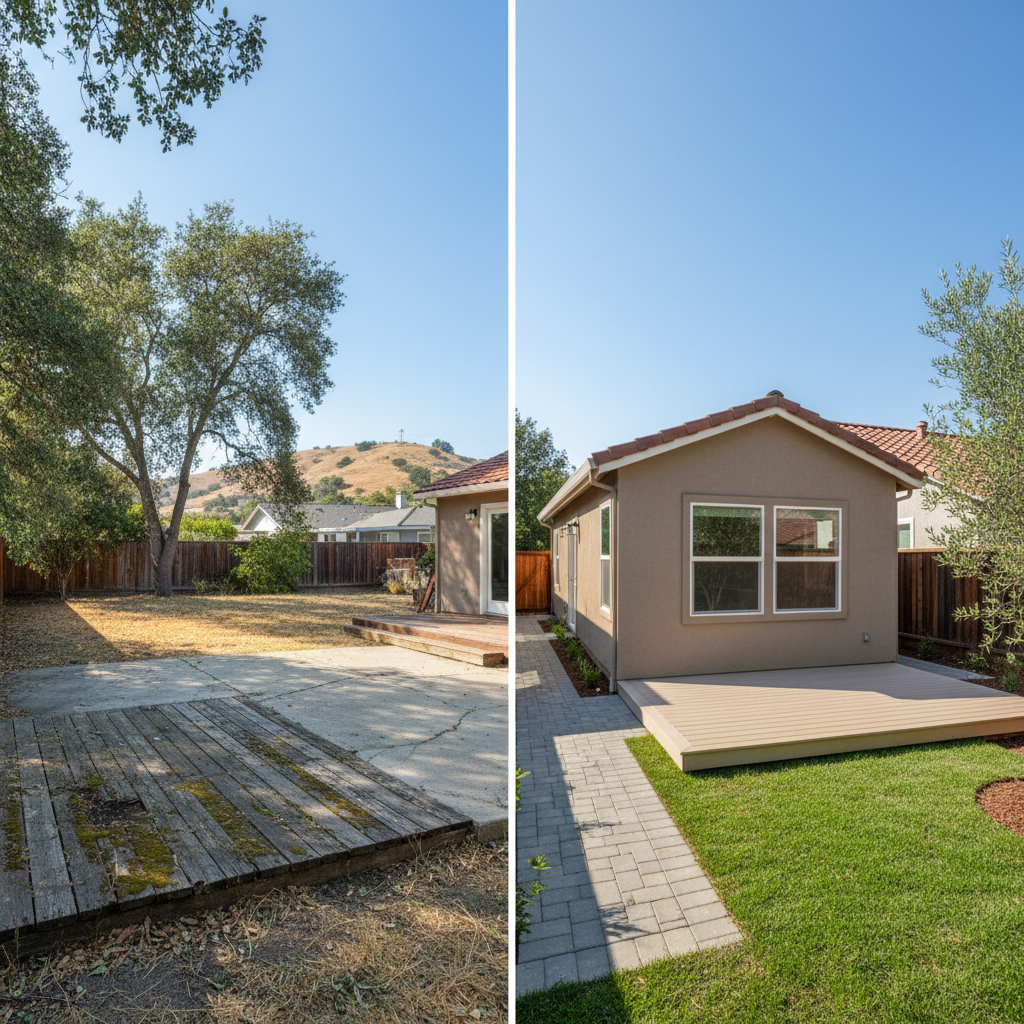
Alright, so you're thinking about adding a detached ADU to your property here in Pleasanton. That's a smart move, no matter if it's for family, some extra rental income, or just a bit more space. Once you decide to go detached, one of the first big choices you'll hit is whether to build it the traditional stick-built way or go with a modular, prefabricated unit. Both have their upsides and downsides, and believe me, I've seen plenty of both go up around here, from the older homes near downtown to the newer developments out by Stoneridge.
What's the Real Scoop on the Difference?
Let's clear this up right away. A stick-built ADU is just what it sounds like: we build it piece by piece, right there on your property. Pretty much the same way your main house was built, actually. We pour the foundation, frame the walls, put on the roof, and finish everything on site. It's the classic construction method.
A modular ADU, on the other hand, gets most of its construction done in a factory. They build sections, or modules, complete with walls, plumbing, electrical, and sometimes even finishes like cabinets and flooring. Then, they truck these modules to your site and use a crane to set them down on a foundation we've already prepared. After that, we connect the modules, hook up all the utilities, and finish any remaining work on the property.
Cost: It's Not Always What You Expect
Everyone just assumes modular is cheaper, right? And sometimes it is, but it's not a given, especially in our neck of the woods. With modular, you *might* save a little on labor costs because so much of the work happens in a controlled factory setting, which can be more efficient. But then you've got to factor in transportation costs for those big modules, plus renting a crane to set them. That crane isn't cheap, and if your backyard access is tricky, those costs can really stack up.
With stick-built, you're paying for all the labor on site, sure, but you're not paying to ship a whole house or for some massive crane. Material costs tend to be pretty similar either way. What really pushes the price for both methods is the finishes you pick, how complex the design is, and any site-specific challenges like grading or digging trenches for utilities. Honestly, for a standard size ADU right here in Pleasanton, the final price tag between a well-managed stick-built project and a modular one often ends up being pretty darn close. Don't let anyone tell you one is always dramatically cheaper than the other without getting a real quote first.
Durability and Longevity: Built to Last
This is where I often see folks get the wrong idea about modular construction. They think 'mobile home' or 'temporary structure.' But that's not what a modern modular ADU is at all. These units are built to the exact same California building codes as stick-built homes. In fact, because they have to survive being hauled down the highway on a truck, they're often designed with extra structural reinforcement. They're not going to fall apart on you, trust me.
A well-built stick-built ADU, using quality materials and good craftsmanship, will absolutely last for generations. The key phrase there is 'well-built.' Just like with any construction, the quality really comes down to the builder and the materials they use. Both methods, when done right, will give you a durable, long-lasting structure. Here in Pleasanton, with our occasional heavy rains and the expansive clay soils we sometimes deal with, a solid foundation and good drainage are crucial, no matter how the walls go up.
Maintenance: Pretty Much the Same
Once your ADU is all built and someone's living in it, the maintenance requirements are essentially identical. You'll need to maintain the roof, paint the exterior, check the plumbing, service the HVAC — just like any other home, really. There's no special 'modular ADU maintenance' or 'stick-built ADU maintenance.' It's all about keeping up with your property.
Appearance and Customization: Where Stick-Built Really Shines
This is probably the biggest difference between the two. If you want something truly unique, something that perfectly matches the architectural style of your main house, or a specific layout that's a bit outside the box, stick-built is usually the way to go. We can design and build almost anything you can dream up.
Modular units, by their very nature, are more standardized. You'll choose from a set of pre-approved floor plans and exterior finishes. While there's certainly a good range of options and they can look fantastic, you're generally working within a more limited menu. If you're looking for a simple, clean, modern design that's efficient to build, modular can be great. But if you want a custom craftsman bungalow that perfectly complements your 1920s Pleasanton home, stick-built gives you that flexibility, doesn't it?
Timeline: Modular Can Be Faster
This is often touted as a major advantage for modular, and it's true. Because the factory work happens at the same time as the site work (like getting the foundation ready), the overall project timeline can be shorter. You might shave off a few weeks or even a couple of months compared to a stick-built project, depending on how complex it is and how fast local permits move.
However, don't forget that the factory still has a production schedule, and you'll need to factor in lead times for ordering your modular unit. And once it arrives, there's still significant site work that needs doing. It's not like an instant house appears.
My Recommendation for Pleasanton Homeowners
Look, there's no single 'best' option here. It really just comes down to what's most important to you. If:
- You want maximum design flexibility to perfectly match your existing home or have a very specific vision.
- You're not in a desperate rush and really value custom craftsmanship.
- Your site has tricky access that would make craning in modules difficult or expensive.
Then a **stick-built ADU** is likely your best bet. We can make sure it blends in perfectly with your property and meets your exact needs.
If:
- You're looking for a more streamlined process and potentially a quicker build time.
- You're happy with a modern, efficient design from a set of proven plans.
- Your site has good access for large trucks and cranes.
Then a **modular ADU** could be a fantastic choice for you.
At Pleasanton ADU Solutions, we've got experience with both approaches. The most important thing is to work with a builder who understands the local codes, knows the quirks of Pleasanton properties, and can guide you through the process honestly. Don't hesitate to reach out if you want to talk through your specific situation. We can help you figure out which path makes the most sense for your ADU dreams.