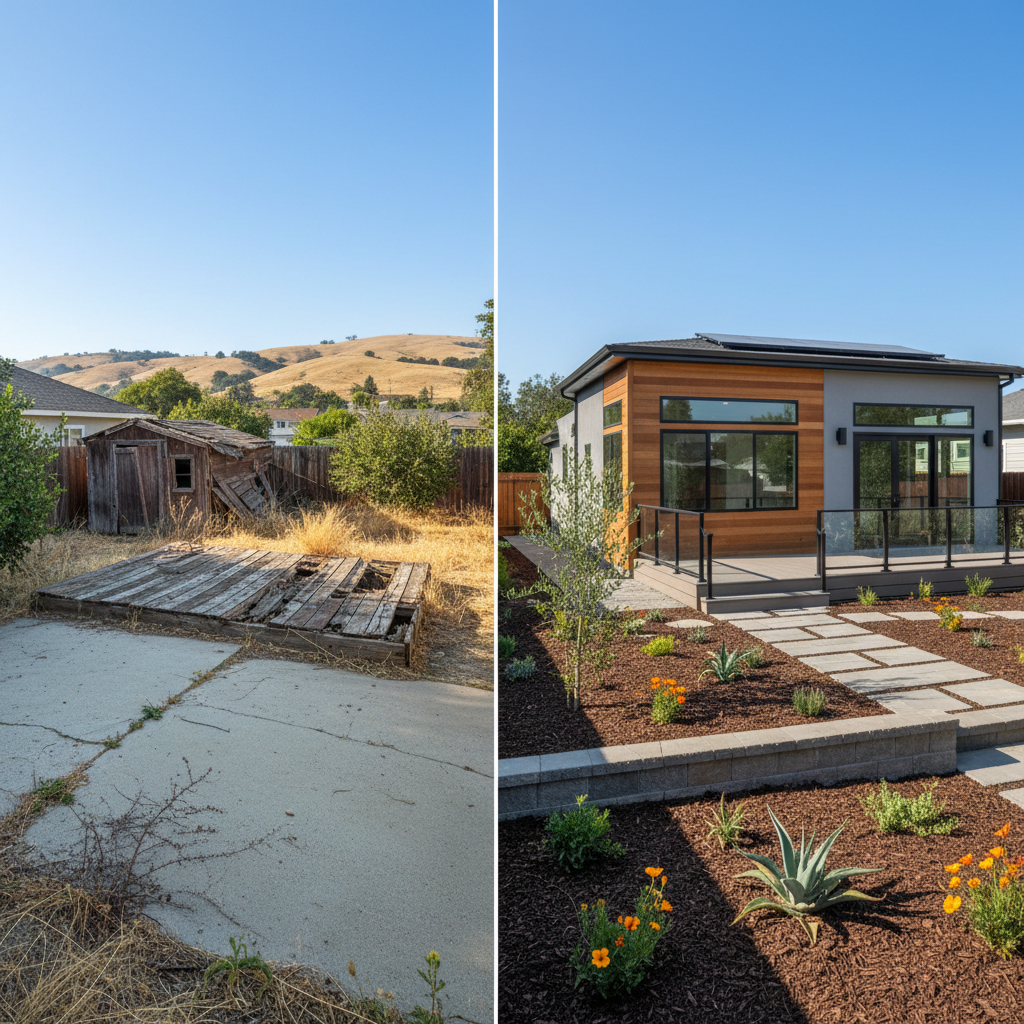
Site-Built vs. Prefab ADU: What's the Real Difference?
So, you're thinking about adding a detached Accessory Dwelling Unit to your property here in Pleasanton. That's a smart move, really, whether it's for family, rental income, or just some much-needed extra space. Once you decide to go detached, one of the first big questions you'll hit is whether to build it on-site from scratch or go with a prefabricated (prefab) unit. I've seen both types go up around here, from the older homes near downtown to the newer developments in Ruby Hill, and honestly, each has its own set of pros and cons.
Let's just ditch the marketing jargon for a minute and talk about what these options *actually* mean for you, the homeowner.
Cost: Where Does Your Money Go?
This is usually the first thing folks ask about, and for good reason. On the surface, prefab units often *look* cheaper. They're built in a factory, which can mean they save money by building a lot at once and wasting less material. You might see advertised prices that seem really attractive. But here's the catch: that price usually doesn't include everything.
- Prefab often means hidden costs: You'll still need to get the site ready, pour a foundation, hook up utilities (water, sewer, electric, gas), pay for the unit to be trucked in, rent a crane to set it down, and do all the finish work to connect it to your existing services. Permitting fees are also a big one, and those folks don't care how your ADU was built. When you add all that up, those initial 'savings' can shrink quite a bit.
- Site-built gives you more control: With a traditional stick-built ADU, your contractor usually rolls all those costs into one comprehensive bid. You know exactly what you're paying for right from the start. While the per-square-foot cost might look higher initially, it often ends up very competitive once you factor in all the necessary site work for a prefab unit. Plus, you're paying for local labor, which is good for our community, don't you think?
From what I've seen, especially with the strict permitting and site requirements we have in Pleasanton, the final cost difference between a well-managed site-built project and a prefab unit can be surprisingly small. Sometimes, it even favors site-built if you're not super careful about all those prefab add-ons.
Durability & Maintenance: Built to Last?
When you're building something new, you want it to stand up to our hot Pleasanton summers and occasional wet winters, right? You certainly don't want to be dealing with constant repairs.
- Site-built: These are constructed using traditional methods and materials, just like your main house. They're built to local codes, which are pretty rigorous here in California. A good contractor ensures quality control right there on-site. You get the same level of durability and expected lifespan as any other well-built home. Maintenance is straightforward—just standard home upkeep.
- Prefab: Modern prefab units are generally well-built in controlled factory environments, which can lead to consistent quality. They're designed to withstand transportation, meaning they're often quite sturdy. However, the quality can really vary between manufacturers. You'll want to dig deep into the specs and materials used. Maintenance should be similar to a site-built unit, but if there's a structural issue down the line, finding a local contractor familiar with a specific prefab system can sometimes be a bit trickier than with standard construction.
For the long haul, both can be durable. But with site-built, you're working with familiar methods and materials that any local contractor, like us at Pleasanton ADU Solutions, can easily service or repair.
Appearance & Customization: Your Vision, Your ADU
This is where the differences really start to show, and it's often a big factor for homeowners who want their ADU to blend in perfectly with their existing property.
- Site-built: This is where you get maximum flexibility. You can design the ADU to perfectly match your main house's architectural style, roofline, siding, windows—everything. Want a specific layout? Need to work around a tricky lot line or a mature oak tree? Site-built gives you that freedom. You're not limited by standard floor plans or module sizes, which is huge.
- Prefab: While many prefab companies offer a range of designs and some customization options, you're generally picking from a catalog. You might be able to choose finishes, but structural changes or unique architectural features are often limited or come with significant upcharges. If you have a very specific aesthetic in mind, or an unusually shaped backyard (which isn't uncommon in some of the older, more established neighborhoods here), a prefab unit might feel like you're trying to fit a square peg in a round hole.
If blending in and having a truly custom look is important to you, site-built usually wins hands down.
My Recommendation for Pleasanton Homeowners
Given the specific conditions we deal with here in Pleasanton—our diverse housing stock, sometimes challenging soil conditions, and the desire for properties to maintain their value and aesthetic appeal—I generally lean towards site-built ADUs for most detached projects.
Why? The flexibility in design means your ADU can be a true asset that enhances your property, rather than just an addition. The cost, when you look at the full picture, is often very competitive. And you get the confidence knowing it's built with local expertise, using standard construction methods that are proven to last in our climate. It's about building a quality structure that integrates seamlessly with your home and neighborhood, and that's what we specialize in at Pleasanton ADU Solutions.