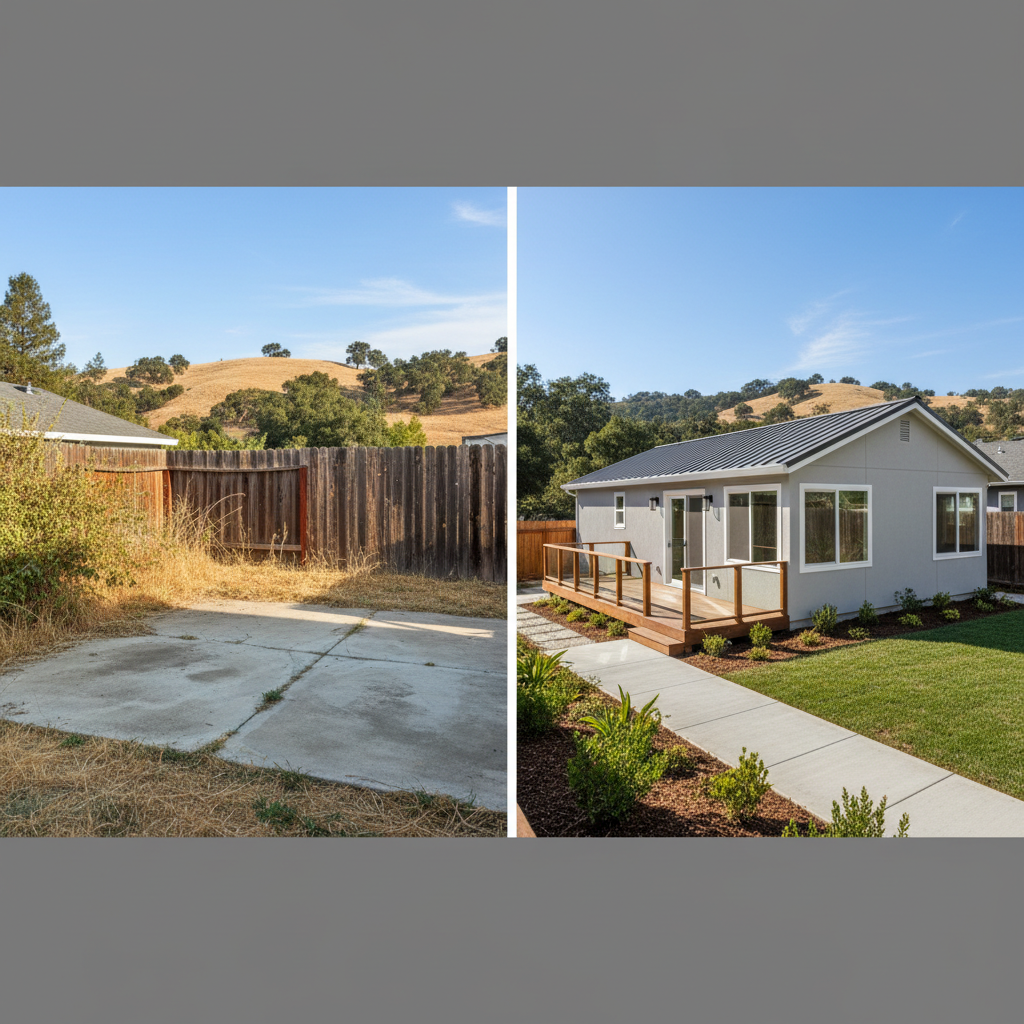
Alright, you've decided on a detached ADU for your Pleasanton property. Smart move. Now comes a bunch of decisions, and one of the big ones that often gets overlooked until you're deep in planning is the foundation. For a detached unit, you've basically got two main choices: a concrete slab-on-grade or a raised foundation with a crawl space. Both have their ups and downs, and what's perfect for one homeowner might not be right for another. Let's dig in.
Slab-on-Grade Foundation: The Direct Approach
A slab foundation is pretty straightforward. We pour a concrete slab right onto ground that's been prepped and leveled. It's common, and for good reason. Think of it as a thick, reinforced concrete pad that your ADU sits directly on. No space underneath, just solid concrete.
Pros of a Slab Foundation:
- Cost-Effective: Usually, a slab is cheaper and quicker to put in than a crawl space. We're talking less digging, less material (no joists, beams, or subfloor needed for the foundation itself), and fewer hours for the crew. This can be a huge help when you're keeping an eye on the budget.
- Durability and Stability: A slab poured correctly is incredibly strong and stable. It's also less likely to have pest problems since there's no open space for critters to hide. Plus, it offers great thermal mass, which can help keep indoor temperatures steady—cooler during our hot Pleasanton summers and warmer in the mild winters.
- Moisture Resistance: When done right, with a proper vapor barrier, a slab does a really good job of keeping ground moisture out of your living space. This is super important in areas where we can get heavy rains, helping to prevent dampness and mold issues.
Cons of a Slab Foundation:
- Limited Access for Utilities: This is the big one, no doubt about it. Once that slab is down, any plumbing or electrical lines buried in it are tough to get to if something goes wrong. A leak under the slab? That means breaking up concrete, which is messy, expensive, and a real headache.
- Less Forgiving for Uneven Sites: If your lot isn't perfectly flat, you'll need more grading and fill work to get it ready for a slab. That can definitely add to the costs.
- Potential for Cracking: While it's rare with the right rebar and control joints, concrete can crack. It's usually just cosmetic, but sometimes it can be more serious if the ground settles unevenly.
Crawl Space Foundation: The Raised Option
With a crawl space foundation, your ADU gets built on a series of concrete footings and stem walls. This creates a space (usually 18-36 inches high) between the ground and the bottom of your floor joists. You then have a subfloor, and your finished flooring goes on top of that.
Pros of a Crawl Space Foundation:
- Easy Utility Access: This is the number one advantage, hands down. All your plumbing, electrical, and HVAC ducts run through that crawl space. If you have a leak, a wiring issue, or need to run a new line, it's usually a much simpler fix than with a slab. For future maintenance or modifications, this is a huge plus.
- Better for Sloped Lots: If your property has a bit of a grade, a crawl space can often be designed to accommodate it more easily than trying to perfectly level for a slab. This could potentially save on excavation costs.
- Warmer Floors: Some folks find that homes with crawl spaces have warmer floors because of the air gap, which can be a comfort factor.
- Easier to Level: If there's any minor settling over the years, it's generally easier to re-level a crawl space foundation than a slab.
Cons of a Crawl Space Foundation:
- Higher Cost: Generally, crawl spaces cost more than slabs. You're talking about more concrete for footings and stem walls, more labor for framing the floor system (joists, beams, subfloor), and often more extensive digging.
- Pest Potential: That open space under your home? Critters absolutely love it. You'll need good ventilation and regular checks to make sure you don't have unwanted guests like rodents or insects making a home there.
- Moisture Issues: Without proper moisture barriers, ventilation, and grading, crawl spaces can get damp. This can lead to mold, mildew, and wood rot. This is especially true in areas with clay soils like we have in parts of Pleasanton, which can really hold onto moisture.
- Less Thermal Mass: While some find the floors warmer, the lack of direct contact with the ground means less thermal mass. This can sometimes mean higher heating and cooling costs if it's not insulated well.
My Recommendation for Detached ADUs in Pleasanton
Look, both are perfectly viable options, but for a typical detached ADU here in Pleasanton, I usually lean towards a slab-on-grade foundation, with a few important caveats, of course.
Why? For most flat or gently sloped lots, the cost savings are significant, and the durability is excellent. With proper planning, we can place all your plumbing and electrical runs strategically before the pour, which minimizes future issues. We make sure to use high-quality vapor barriers and proper compaction to prevent moisture problems. Plus, fewer places for pests to hide is always a win, right?
However, if your lot has a significant slope, or if you're building a larger ADU where future access to utilities is a major concern for you, then a crawl space might be worth the extra investment. It really just comes down to your specific property, your budget, and your long-term plans for the unit.
No matter which way you go, the key is proper design and execution. You want a foundation that's built to last, especially with our local climate and occasional seismic activity. At Pleasanton ADU Solutions, we make sure to discuss all these options with you upfront, so you can make an informed decision that's right for your home and your wallet.